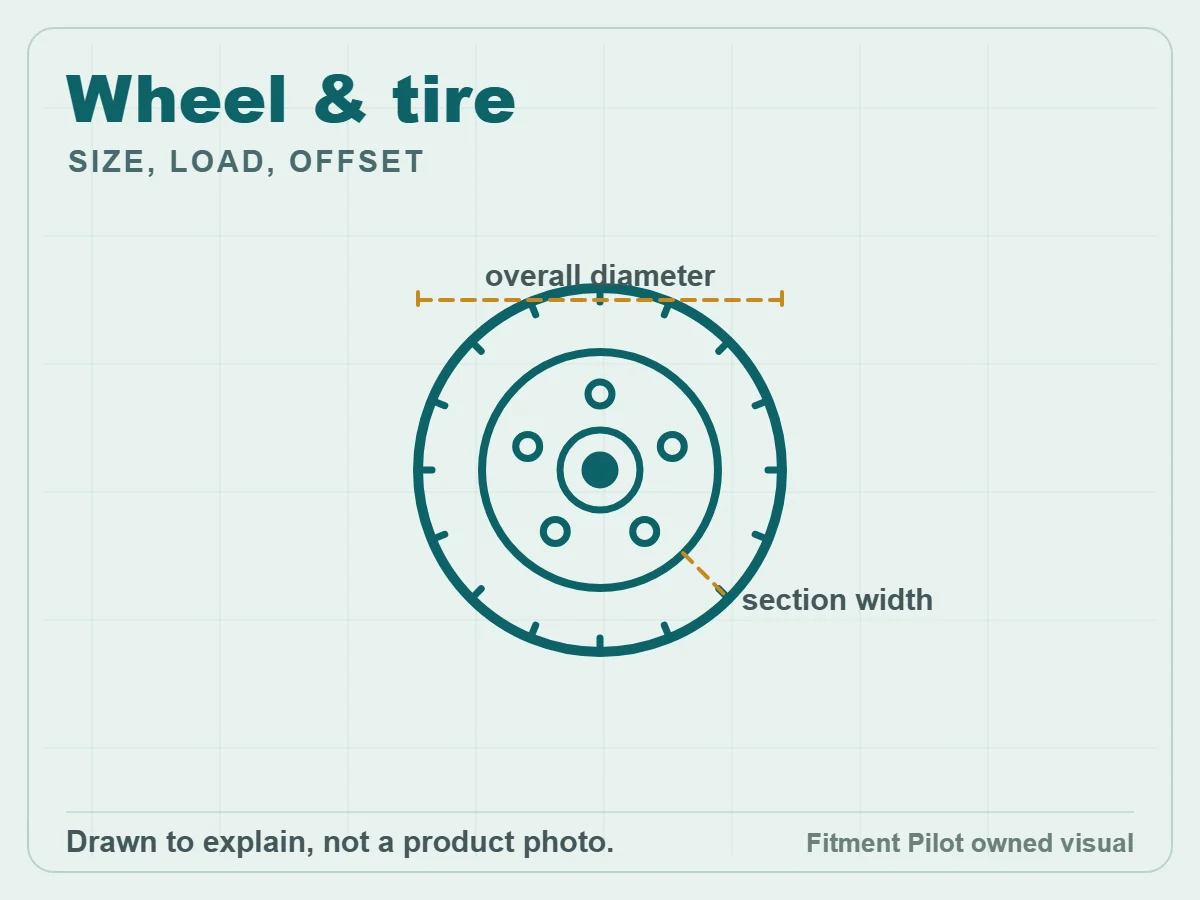
Use this shelf to compare tire diameter, rim width, offset, load range, and seller availability before leaving Fitment Pilot. The strongest matches still need final stock and checkout confirmation because several wheel and tire offers need deeper seller choice or fresher checks before broad promotion.
Wheel and tire checks before opening a seller page
Match tire size, service description, load range, wheel width, and offset to the exact truck page.
Wheel and tire checks before opening a seller page
Confirm seller stock, shipping total, return terms, and package quantity before ordering.
Wheel and tire checks before opening a seller page
Treat category visuals as shopping context unless an exact reviewed product image is shown.
Fit comes down to wheel width, offset, and suspension and brake clearance, so compare the full package rather than the size on the sidewall. Load index and inflation requirements determine whether the tire can carry the truck's load. As of 2026-07-26, 58 of the 59 fitment records on this shelf state a maximum tire diameter, and those run 30.5 to 35.3 inches with a 34.5 inch median - check the record for the exact truck rather than treating that range as a universal limit. One that clears on one truck can rub on the same model with a different wheel offset, because offset and backspacing determine where the tire sits in the well - wheel offset, backspacing, and rim width is the place to start if any of those terms are fuzzy.
Load range ties inflation to carrying capacity; load index identifies the maximum under specified conditions. A lower-rated replacement does not change the truck's published payload rating, but the tire can become the limiting component. Truck tire load range, LT vs P-metric, and reading a load-inflation table cover those checks.
Read the DOT date code before mounting a tire sold as new - tire date codes explains the week-and-year stamp. After wheel installation, follow the wheel maker's or installer's re-torque instructions.
Common questions
Will a larger tire fit without a lift?
Sometimes - offset decides it as much as diameter, and the answer depends on the specific truck. Measure clearance at full lock and full compression, not just standing still.
What tire load rating does my truck need?
Choose a load index and load capacity that meet the vehicle maker's requirements. Load range describes the load and inflation limits; if the truck tows or hauls, check the applicable load-inflation table.
How do I check the age of a new tire?
Read the last four digits of the DOT Tire Identification Number - week, then year - and compare the date against the makers' age guidance before you buy.
Do I really need to re-torque after 50 miles?
Follow the wheel maker's or installer's instructions. New aftermarket wheels are commonly rechecked after 50 to 100 miles using the specified torque and sequence, so confirm the number for the exact wheel at installation.
Do bigger tires change my speedometer?
Yes. A taller tire covers more ground per revolution, so the speedometer reads low until recalibration. Many trucks can be recalibrated with a dealer tool or supported programmer - measure the installed diameter and match the correction to it.
Top parts
Seller links may earn Fitment Pilot a referral fee. Fitment guidance and deal quality come first.
Every product page carries seller choices, stock notes, and return-policy checks; prices below are recorded lows.
Compare fitment details, product picks, and seller choices.
$529.99
Privacy choices
Cookie choices
Fitment Pilot uses necessary browser storage for saved vehicle choices and site operation. Optional analytics helps us understand which fitment guides are useful. Optional advertising allows approved AdSense requests. Choose what you allow; you can change it later from Cookie settings.
Optional storage
Necessary storage is always on. Optional choices apply to this browser and can be changed later.
AdSense is currently configured conservatively: when enabled, the site requests non-personalized ads. Personalized ads require an appropriate Google-certified consent platform in some regions.