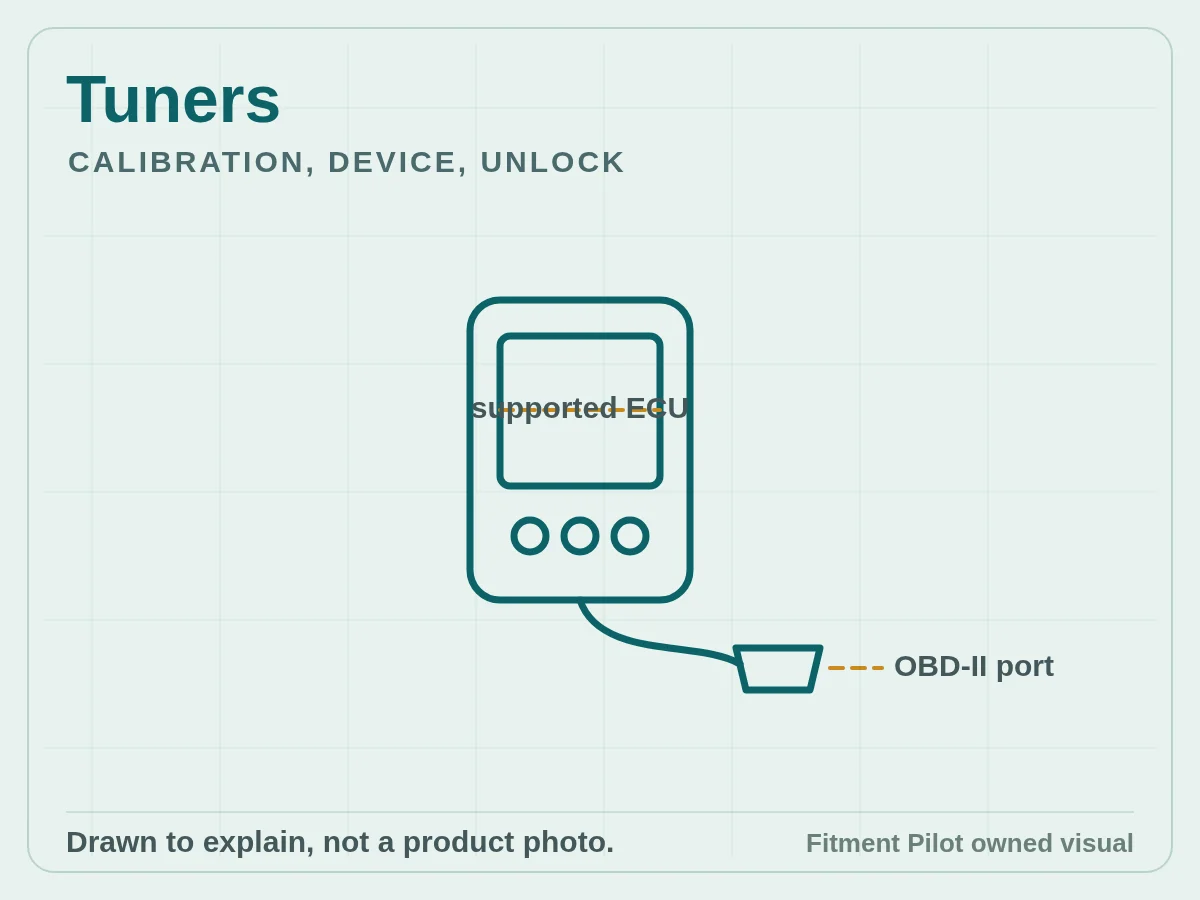
Truck tuning changes a supported engine or transmission calibration or uses an inline module to alter sensor inputs; depending on the device, it can affect throttle response, shift behavior, fueling, ignition timing, boost, tire-size correction, or monitoring. For U.S. road use, emissions legality and exact vehicle support come before performance claims. Any device that changes engine calibration can affect emissions compliance, and a device or calibration designed to defeat or disable emissions controls is not legal for road use. Federal law and state requirements can differ; see the Tuners and programmers guide for emissions legality, engine support, and warranty risk.
Match support to the exact engine and model year, not the truck family. The same nameplate across two years can use different engine control hardware; an unsupported device may not communicate or program correctly, so never assume a listing for one applies to the other. Compare the listing against the VIN before you order. Before installation, compare the device's engine and transmission coverage, ECU or calibration support, and any emissions approval or applicable CARB Executive Order for the exact device, calibration, vehicle, engine, model year, and jurisdiction. Also check the update path, credits, and logging or diagnostic requirements. If the truck already has engine or emissions fault codes, diagnose them before changing calibration. Some tools stay linked to the first VIN they program, so confirm the maker's VIN-release or license policy before buying used.
Treat warranty exposure as a real cost. Manufacturers can refuse a powertrain claim when a calibration change caused the damage or repair at issue, and some platforms may retain flash counters or other traces depending on the tool and software. For Ram 2500 owners evaluating diesel emissions hardware, see the Ram 2500 diesel accessories guide for legality, warranty, and exact-engine checks.
Common questions
What is truck tuning?
Truck tuning is a device-specific change to supported engine or transmission calibration, or an inline module that alters sensor inputs. Depending on the device, it can affect throttle response, shift behavior, fueling, ignition timing, boost, tire-size correction, or monitoring. Match the exact engine, transmission, model year, emissions requirements, and calibration support before buying; see the Tuners and programmers guide for device-specific legality, support, and warranty checks.
What does a tuner do for a truck?
A tuner can change supported calibration parameters, which may affect throttle response, shift behavior, fueling, ignition timing, or boost control. Many devices also read live data and diagnostic codes. Features and results vary by device, vehicle, and calibration, so confirm exact engine and model-year support and emissions legality before buying.
Are tuners legal?
For U.S. road use, legality depends on the specific device, calibration, vehicle, and both federal and state requirements. A device or calibration designed to bypass or disable emissions controls can violate federal law; verify the exact approval and applicable state requirements. Rules outside the U.S. may differ.
Will a tuner void my powertrain warranty?
Not automatically. A calibration change does not by itself cancel the entire warranty, but a manufacturer can refuse to cover damage it connects to the change. Coverage depends on the warranty terms, jurisdiction, and evidence about the claimed damage; assume the change may be discoverable and weigh that risk before buying.
Can I use one tuner on two trucks?
Often not without additional steps. Confirm whether the device must be unmarried from the first truck, released by the tool maker, or licensed for another VIN before you buy a used one.
Can a dealer tell if a truck was tuned after returning to stock?
Sometimes. Returning to stock may restore a factory calibration, but some platforms can retain flash counters or other traces a dealer tool can read. Treat tuning as visible rather than invisible when thinking about warranty conversations, and keep the stock file backed up.