Overlanding gear is a payload budget before it is a gear list. Tents, drawers, water, extra fuel, and recovery equipment add up quickly, and the truck's payload rating - not its tow rating - constrains the build. Weigh the plan before buying the platform.
Sequence matters. Suspension, wheel, and tire choices should follow the loaded weight rather than precede it, because a truck set up empty behaves differently once it is carrying the full kit. Mounting hardware also interacts with the rack, bed cover, and drawer install, so plan those as one system.
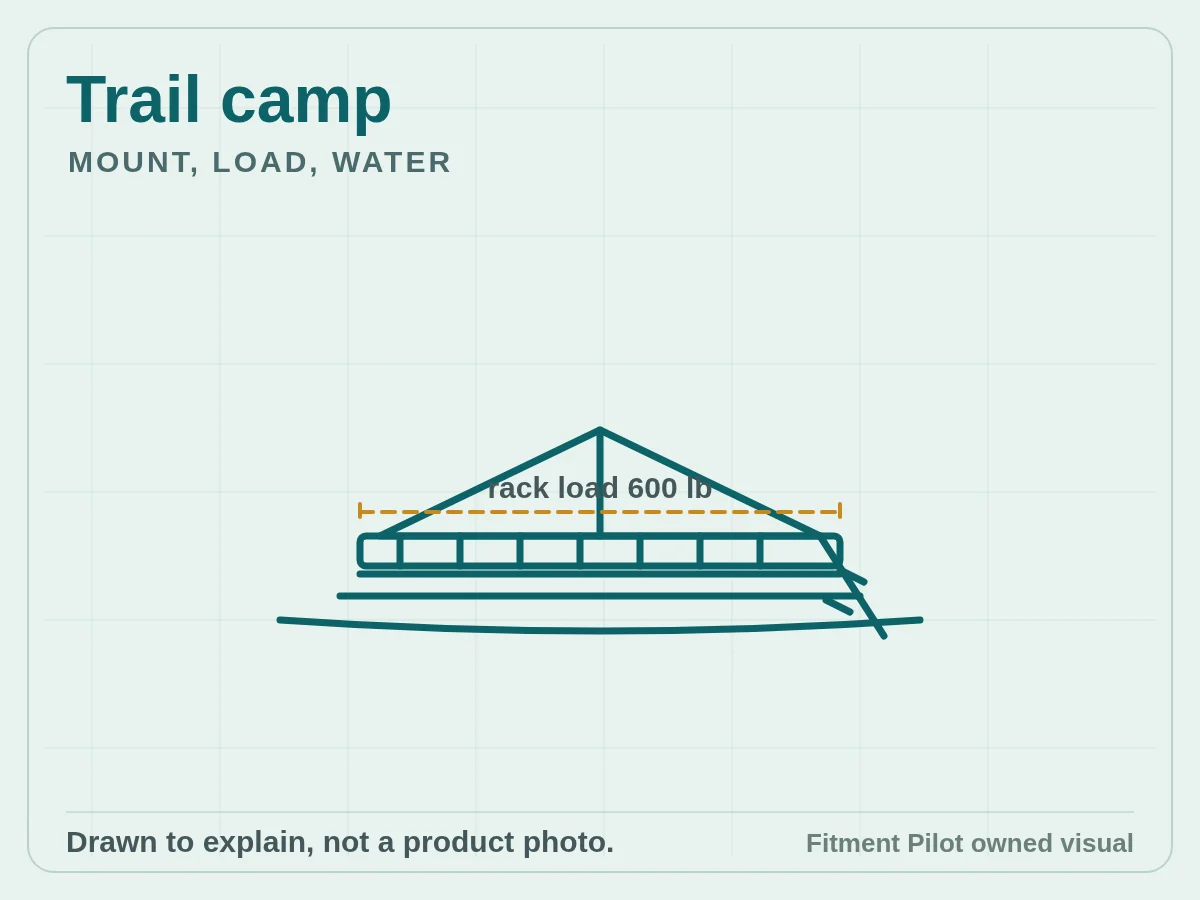
Payload discipline comes first. Tent, rack, drawers, water, recovery gear, extra fuel, and passengers all consume payload. Load heavy items low and position them so front and rear axle, tire, and gross vehicle ratings remain within limits. Verify the completed build on a certified public scale with the truck loaded as it will travel.
Common questions
What limits how much gear I can carry?
Payload, which includes passengers and everything installed on the truck - not the tow rating.
Should I upgrade suspension first?
Decide the loaded weight first - suspension and tire choices for an empty truck often ride poorly once the build is complete.
How much weight does a roof-top tent add?
Use the tent's published installed weight, including mounting hardware, bedding, and accessories. It counts against payload and the rack system's dynamic load limit while driving, and it raises the center of gravity - confirm both numbers if a tent is the plan.
What overlanding gear should come first?
Start with water, first aid, communication, and tire repair and inflation, and match the recovery gear to the truck's approved recovery points and trip conditions. Choose storage and comfort upgrades after the safety essentials fit within payload.
Do I need a second battery for overlanding?
Not at first - it depends on the electrical load and the trip length. A portable power station or a healthy single battery covers lights and a small fridge for short trips. Add dedicated auxiliary power - battery, wiring, and charging - when the load outgrows what the starting battery can safely supply, and measure the actual draw before you size it.