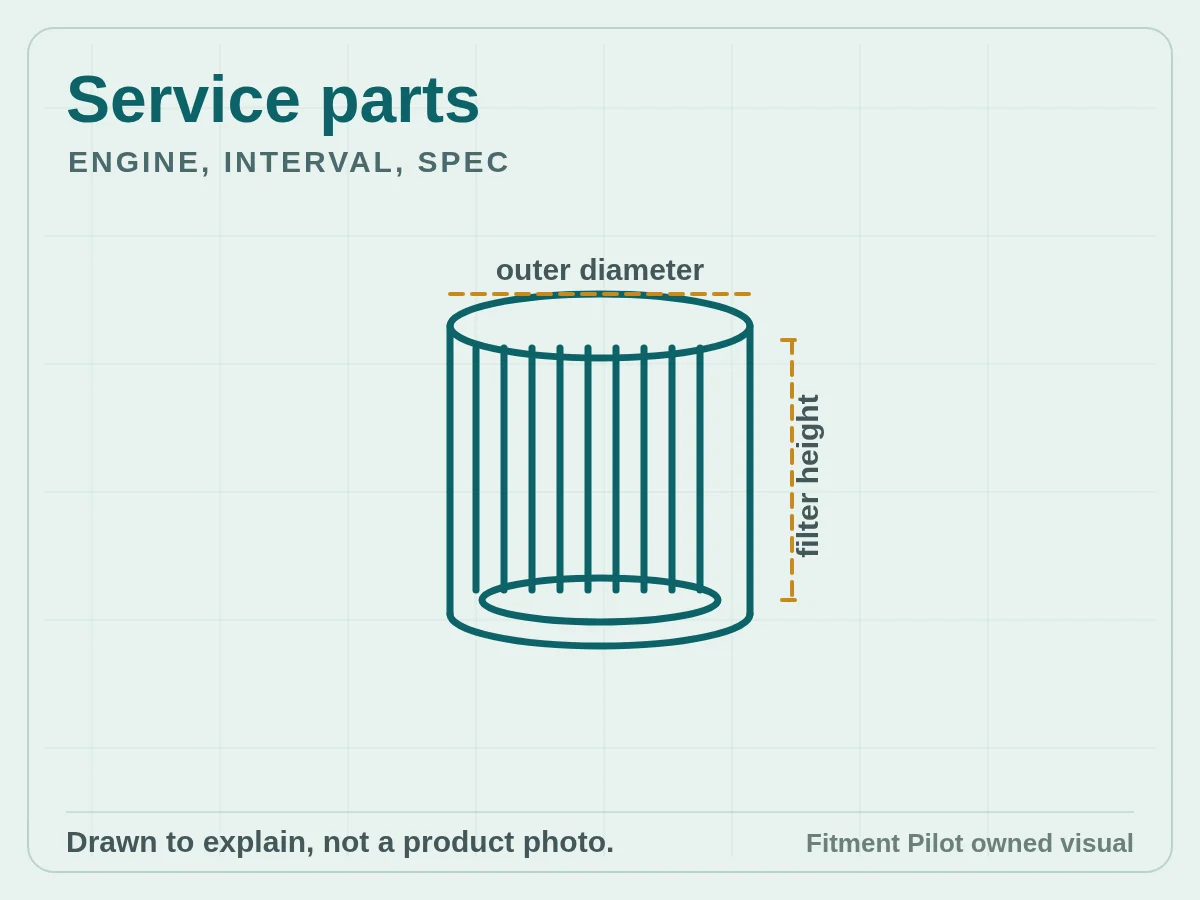
Shopping for a truck air filter starts with choosing the service: an engine air filter cleans intake air, while an oil filter filters engine oil. For an air filter, match the exact year, make, model, and engine to the airbox or intake setup, gasket profile, and final part number; the oil and air filters guide walks through those checks before you order. A truck filter is a category, not one universal part, so do not choose by badge alone.
First decide whether you need a replacement air filter or a complete intake. A replacement panel fits the factory airbox; a drop-in performance panel does too. A complete intake replaces more of the factory tract and may change the mass-airflow sensor housing or location. Before ordering, use cold-air intakes and CARB status to verify application-specific emissions legality, including a CARB Executive Order where required.
Follow the exact truck's maintenance schedule and oil-life system, if equipped. Dust can shorten engine-air-filter life, while towing, repeated short trips, and extended idling can shorten oil-service intervals under some manufacturers' severe-use guidance. The cabin air filter is a separate service item with its own interval - replacing one does not cover the other.
Common questions
How often should truck oil and air filters be changed?
Follow the owner's manual and oil-life monitor, if equipped. Replace the oil filter with each oil change. Inspect or replace the engine air filter at the specified interval, and check it more often in dusty service.
Does an aftermarket filter void the warranty?
Using an aftermarket oil or air filter does not void the vehicle warranty by itself. A manufacturer or dealer may deny coverage for damage it can show was caused by a defective filter or improper installation. Keep maintenance receipts and part numbers.
Does engine size matter when buying oil and air filters?
Yes. Engine choice can change the oil-filter design or air-filter part number, even within the same model year. Confirm the final part number for the exact year, make, model, and engine; some applications also vary by production date or filter housing.
What should I check before buying a truck air filter?
Confirm the exact year, make, model, and engine, then match the filter's gasket profile and the truck's airbox or intake setup to the seller's part number. A trim badge alone is not enough when multiple engines or filter housings were offered; use the [oil and air filters guide](/guides/truck-oil-and-air-filters) before ordering.
How do I know which truck filter I need?
First identify the service: an engine air filter and an oil filter are different parts, and a cabin air filter is a separate service item. Then confirm the exact year, make, model, and engine; for an air filter, match the airbox or intake setup and gasket, and for an oil filter, confirm the engine-specific part number. Do not choose by truck badge alone.